
About 2 years ago, I stumbled across an interesting project: a team of developers from Ontario was developing an armband named Myo that would detect all muscle movements in your arm. It would then allow you to control all kinds of objects around you.
Youre sold, right? I was, too. I immediately pre-ordered one, and started imagining tons of potential uses for this thing.
Fast-forward 2 years, I finally received it! Ive been playing with it for the past few weeks and it definitely has some potential. Were still far from the demo video though: Thalmic (the company behind Myo) will need to get more developers involved to integrate Myo support for games, applications, and other gadgets. Still, its a nice little toy, and it could become very useful!
First impressions

I was happily surprised when I first put the band on: its quite comfortable. It stays on, but doesnt squeeze your arm too much and doesnt make you sweat either. You quickly forget that youre wearing it, until you sit down at your desk and start knocking it every time you want to type something. It seems sturdy though; I have yet to make dents on it.
It has to be in direct contact with your arm so you cant wear it above a shirt. That can be annoying, but I found that I could wear it under a hoodie or a large pullover and no one would notice.
I think it looks good. Thalmic went through several different prototypes before to get to that model, and Im glad they took their time and came up with something small, light and that I feel comfortable wearing around all day.
It isnt designed to be worn for extended periods of time, though. Thalmic didn’t intend for the Myo to be something you wear all day.
Turning it on
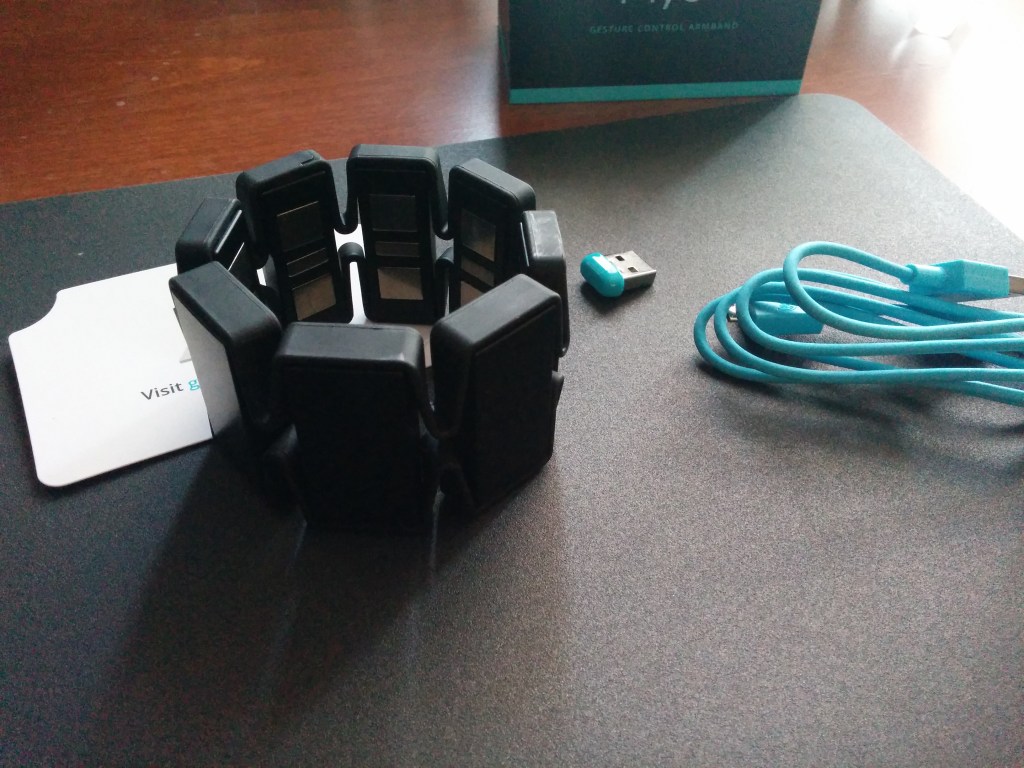

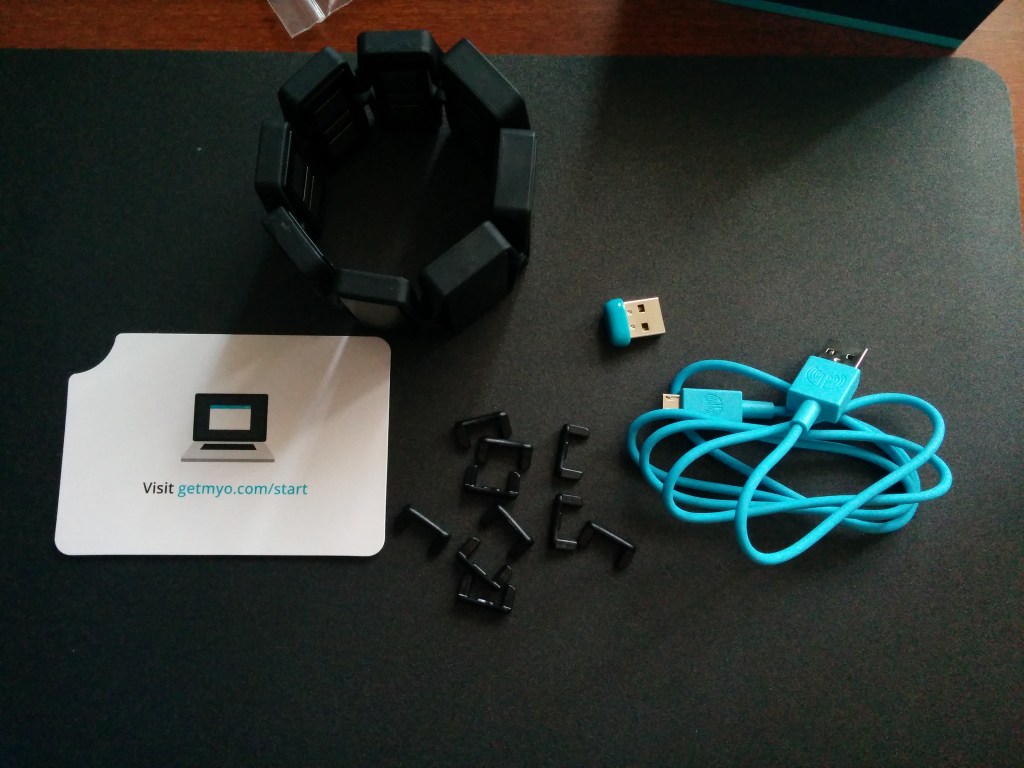
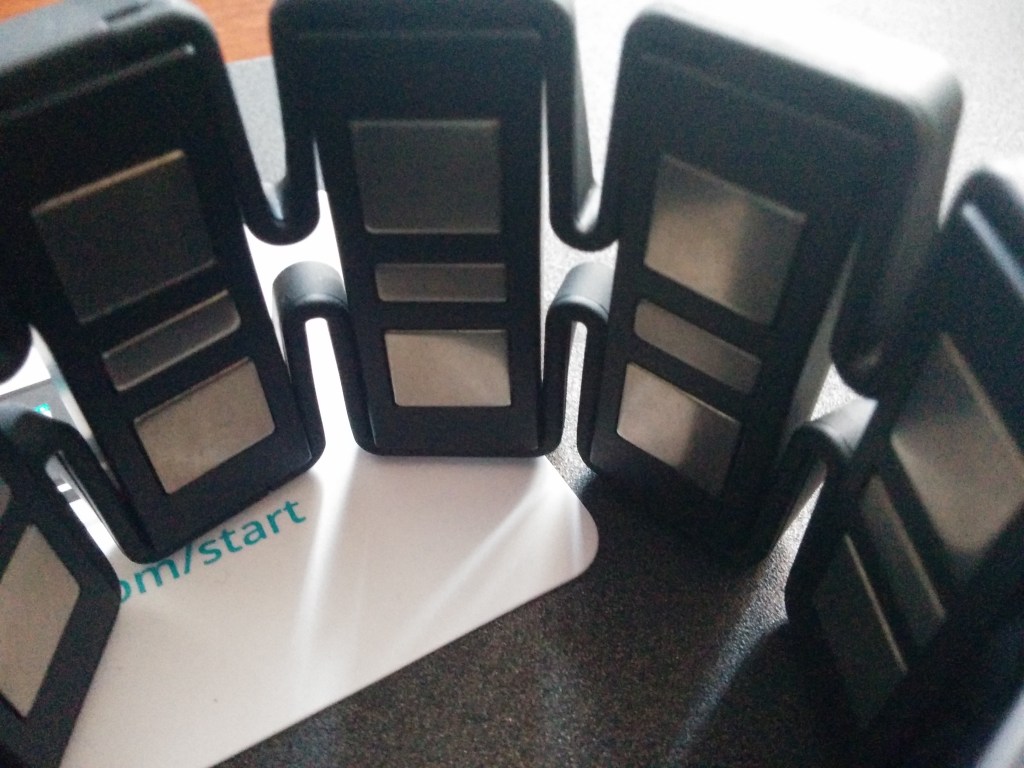
Myo comes with a dongle for your computer and a standard Micro USB cable to recharge the band. It doesnt take long to charge, and I was able to use it for a whole day before the battery ran out.
To get started, you have to install a small app on your computer to configure the band, calibrate it, and update its firmware.
A tutorial walks you through the 5 basic gestures recognized by Myo:
- Make a fist
- Spreading your fingers
- Wave your hand in
- Wave your hand out
- Touching your thumb to the tip of one of your fingers
These are the default gestures, but you can easily configure your band to answer to other gestures if needed.
Myo also monitors the position of your arm in space, as well as its rotation. It allows developers to create combos of gestures, like a fist and a rotation of your arm to decrease or increase volume in a music app.
Interact with devices around you
Once youre familiar with the different gestures, you can pair the device to your computer, to a mobile device (both iOS and Android are supported), or to any other device such as a GoPro camera.
By itself it wont be that useful though; youll need to install apps to be able to use the band with things like iTunes, your browser, Spotify, Netflix, Keynote, Gmail, or the music apps on your phone. Take a look at the Myo marketplace to get a few examples of the apps you can use today.
Thalmic also has a series of videos explaining you how to use the armband, and giving you some examples of things you can do. In the video below, Myo is used as a secondary controller to navigate a map:
Develop for Myo
Developers are working hard on developing new apps, and creating SDKs to interact with more and more devices. Thalmic started shipping developer kits last fall, so I suspect well see more and more apps released in the next few months.
I for example discovered Myo.js, a library allowing you to add Myo support to your site or your app. That pushed me to dig around a bit. There are 3 main ways to develop for Myo:
- You can create desktop apps. Youll need to use Lua, a programming language I knew nothing about until now, but that seems easy enough to learn from what Ive seen. When creating these apps, you can decide where it will be triggered: when using a specific software, when visiting a specific site in your browser, or all the time.
- You can use the iOS and Android SDKs to develop mobile apps.
- You can use existing libraries like Myo.js.
The mobile SDKs are a bit over my head at the moment, but Ive already started playing with Lua. Ill post more about a small app I developed for Plex soon. Stay tuned!
Ill also start looking at Myo.js, so expect some WordPress / Myo integrations soon. 🙂
Whats your take on this new wave of wearable tech? Will you rush to pre-order a Myo now? Let me know if you have app ideas or things you think should be cool to be able to do with Myo.
